
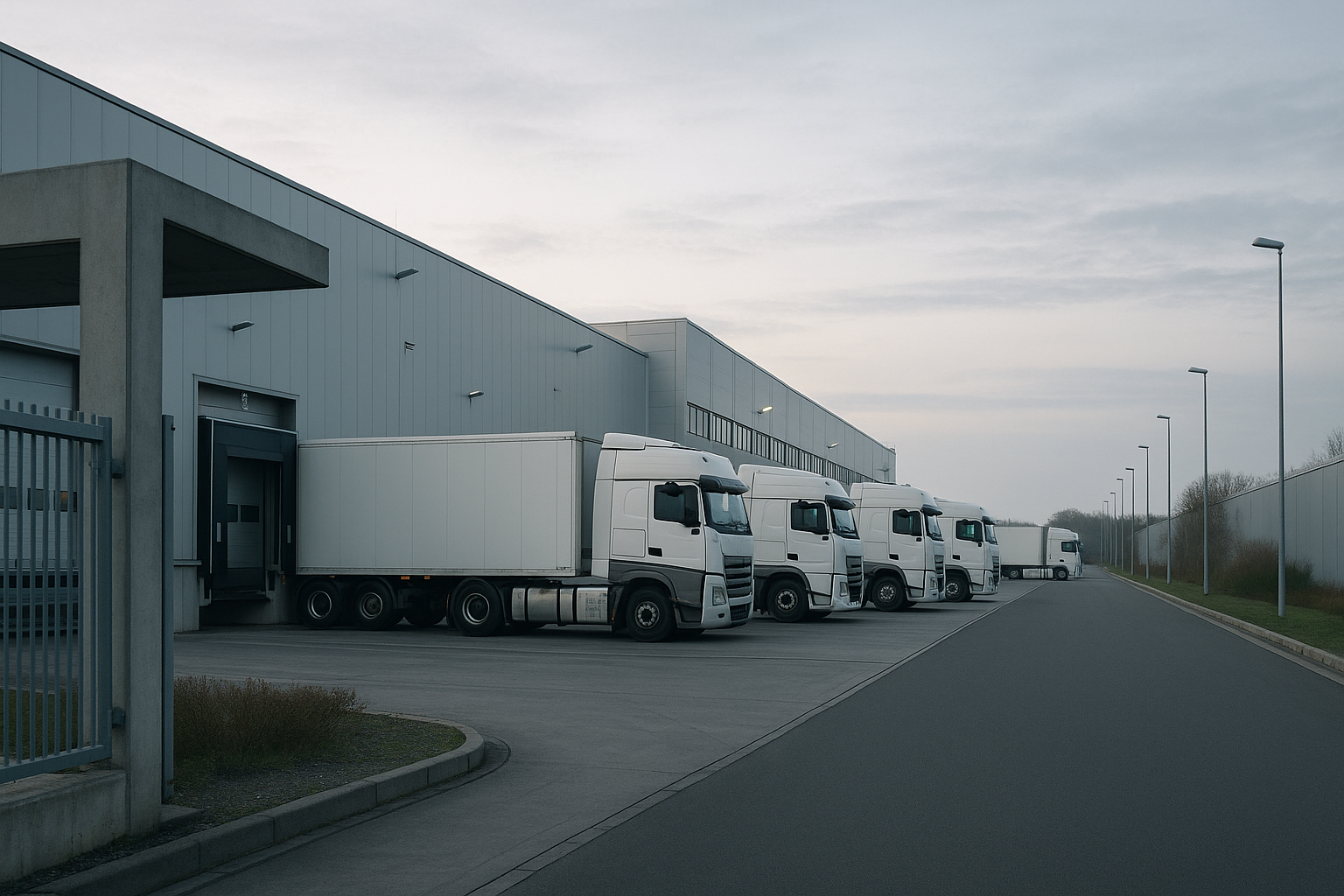
Have you checked in the last six months what drivers are writing about your site on Google Maps? Not your customers. Not job applicants. But the men and women who show up daily with a 40-tonne truck, often wait for hours — and then leave a star rating.
The channel most logistics managers overlook
Google Maps is not a marketing channel for manufacturing sites. Most people think so, anyway. But haulage firms use it — informally, as a matter of course. Dispatchers allocating new routes check it. Drivers who’ve never visited you before check it. Subcontractors deciding whether to accept a job check it.
What they find helps determine whether your plant is seen as an attractive destination or a place to avoid if you have any choice.
And in the spot market, you usually have a choice.
What drivers really write
Search your plant location on Google Maps and scroll to the reviews. Filter for entries containing words like “lorry”, “driver”, “dock”, “waiting time” or “entrance”. What you read there is not structured feedback. It’s unfiltered everyday reality.
Typical entries sound like this:
- “Waited 3 hours even though I had a time window. No communication, no rest room.”
- “Entrance unclear, security guard unfriendly, unloading time overran. Never again.”
- “Brilliantly organised, always on time, would drive here again any day.”
The third comment is not an exception. Some plants have it — most don’t.
Here’s what’s interesting: these comments don’t build up evenly throughout the day. They pile up during phases when the yard is overloaded. When multiple drivers arrive simultaneously, docks are occupied and no one can give reliable information. When the only thing a driver can do is wait and reach for his phone.
The economic mechanism behind it
Bad driver reviews don’t make the news. They lead to something more subtle: carrier selection.
Haulage companies with growing fleets track where their drivers like to drive and where they don’t. Experienced drivers often keep an informal blacklist — sites they won’t accept work for, or at least not voluntarily. Experienced drivers are scarce. Dispatchers give them the more pleasant routes whenever possible.
What does that mean for your plant concretely?
If your site is known as difficult, you’ll either get worse capacity on the spot market — or you’ll pay more. The haulage firm silently factors in the time loss. One extra hour of waiting time per run gets tucked somewhere in the price. No one tells you this explicitly, but it’s in the rate card.
“No dispatcher will tell you: We’re charging you an £80 premium because your yard has a reputation for chaos. They just do it.”
What these costs actually mean
Let’s take a realistic calculation for a mid-sized plant with 35 inbound deliveries per day:
- Average waiting time across all deliveries: 28 minutes
- Of which avoidable through better arrival management: conservatively 15 minutes
- 15 minutes × 35 deliveries × 250 working days = 2,187 hours of dwell time per year
Dwell time is calculated differently by haulage firms — some as a flat fee, some free after 60 minutes, some billable from the first minute. But even if only a third of these hours get charged: at typical HGV dwell-time rates of £25–40 per hour, we’re talking about costs between €25,000 and €40,000 annually — without anyone in your business explicitly budgeting this line item.
These costs don’t appear on an invoice labelled “yard dwell time”. They’re hidden in freight rates, special agreements, goodwill adjustments.
And then there’s what can’t be calculated directly: the carrier that removes your route from standard transport. The haulage firm that internally marks your plant as “difficult”. The spot surcharge you pay without knowing why other plants in your region get better terms.
Why the morning peak creates the pattern
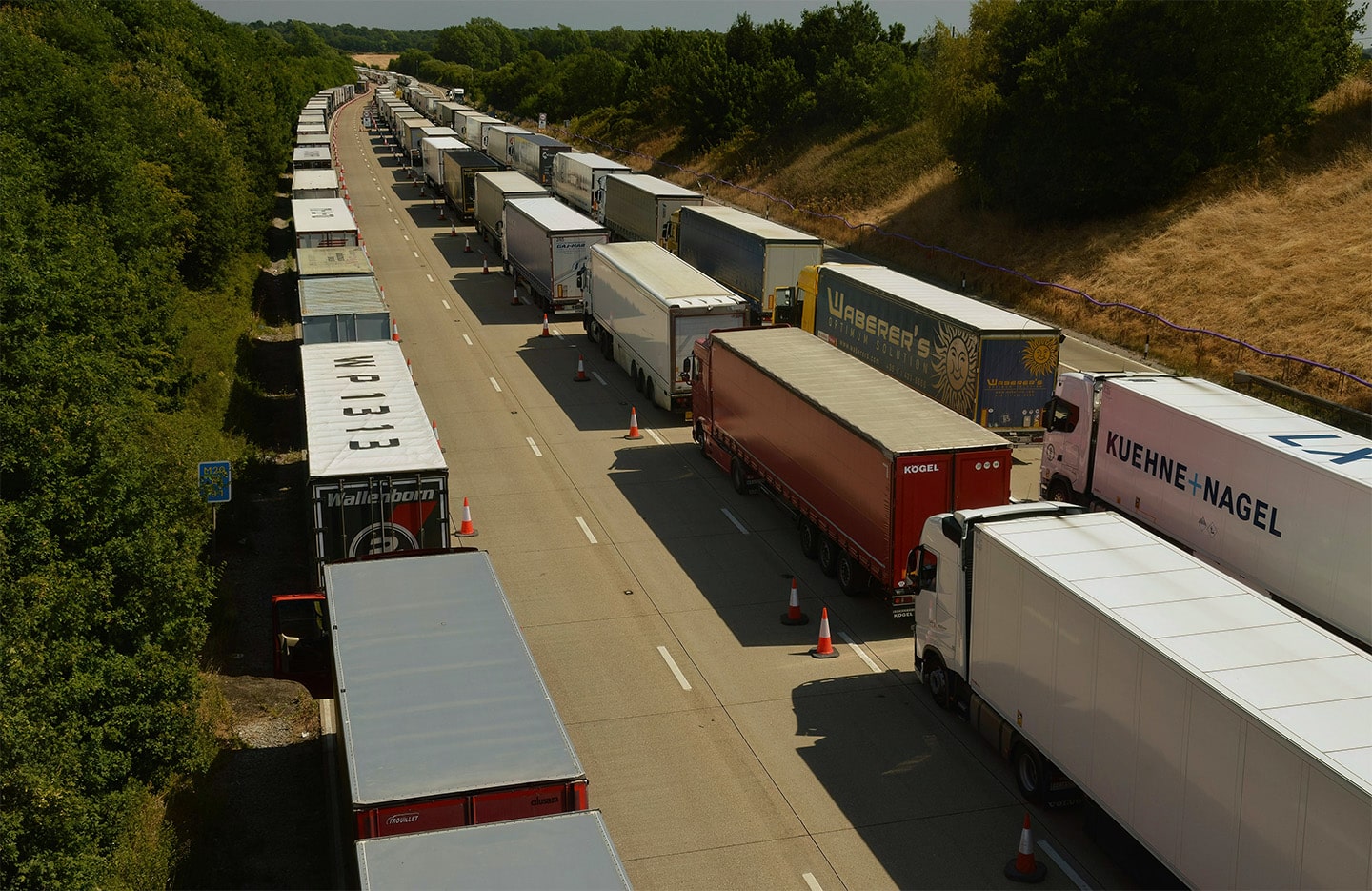
Around 40% of all daily inbound deliveries arrive in the first 90 minutes after the plant opens. That’s no accident and no system failure — it’s a logical consequence of how haulage firms dispatch. Early start means maximum flexibility throughout the day. Drivers who leave early have buffer for traffic, diversions, follow-up runs.
The problem: your goods-in area also only opens at 06:00 or 06:30. The first docks are coming online. Documentation is beginning. And simultaneously, three, four, five vehicles are already in the yard.
What happens then? Everyone waits. The first gets a dock. The second waits. The third waits. The fourth — who might have a time-window for 07:30 — ends up in a situation where the dock is theoretically free, but the yard is still busy managing the early arrivals.
The slot was planned. The arrival was unplanned. And no one knew it in advance.
The structural gap between slot and gate
Time-window portals — whether Cargoclix, Transporeon or others — solve a real planning problem: they create slots. They structure the expected inflow. That has value.
But a slot is not an arrival guarantee.
Between the moment a haulage firm books a slot and the moment the driver shows up at your gate, 12 to 48 hours often pass. In that time, everything happens: subcontractor handovers, route changes, traffic jams, mandatory rest breaks, driver illness. The portal knows nothing of this. You know nothing of this.
And then someone arrives 90 minutes early — because he drove through the night and hopes to finish the job sooner. Or 45 minutes late, because the motorway was gridlocked this morning.
The slot tells you when someone should arrive. It doesn’t tell you when someone will arrive.
That’s not a failure of the portals. It’s a structural gap that booking systems alone can’t close — because the booking system talks to the haulage firm, not to the driver.
The driver is the last link in the chain
Up to 80% of pre-advices in German plants still run on Excel or email. That means: information about an incoming delivery travels from the supplier to the haulage firm — and usually stops there. The driver who actually drives is often a subcontractor. He doesn’t know the slot. He doesn’t know your dock coordinates. He doesn’t know if you can handle a late arrival today or if that’s critical.
He leaves when he has to leave. He arrives when he arrives. And then your yard reacts.
This mechanism is not a failure of individual parties. It’s the normal functioning of a supply chain optimised for haulage efficiency — not for goods-in predictability.
The result, you know: morning peaks, waiting times, the surprised driver at the barrier, the dispatcher call at 06:47 that gets no one anywhere.
What Heylog does at this point
Heylog sends the driver a WhatsApp automatically — before departure, not after arrival. The driver confirms his ETA. You see it in the dashboard. No phone call, no app, no portal login. If a driver arrives earlier than expected, you see it in time to react — not when he’s already in the yard.
That doesn’t change the booking logic. It closes the gap between slot and gate.
What the reputation effect means long-term
Carrier reputation is not a soft issue. It’s an economic variable that translates into freight rates, capacity availability and response times.
A plant known as “fair, punctual, well-run” gets better spot-market offers. Not because haulage firms are altruistic, but because their costing includes less buffer. No congestion in the yard, no driver overtime, no paperwork hiccups at checkout — that reduces risk for the haulage firm, and risk is priced in.
Anyone known as a “waiting queue”, on the other hand, pays a silent premium. Sometimes in pounds, sometimes in worse capacity, sometimes in the haulage firm being unavailable at the next demand spike.
What this has to do with your Google Maps reviews
Everything, directly.
Drivers today are connected. They share experiences in WhatsApp groups, on trucker forums, on Google Maps. What they leave there, the next driver reads — and the dispatcher who decides whether to offer your route at all reads.
One bad Google Maps review costs you nothing individually. Twenty bad reviews over three years cost you capacity — and no one sends you an invoice for it.
Ask yourself: when did you last check what’s written there?
And if you have checked: what did you read — and what would you do differently today?
Frequently asked questions
Why do Google Maps reviews at goods-in affect freight costs?
Haulage firms and experienced truck drivers use Google Maps reviews informally to assess locations. A plant with poor driver experience is treated internally as a risk site — carriers silently factor waiting times and effort into freight rates. On the spot market, this leads to higher quotes or worse capacity availability, without any surcharge being explicitly stated.
Why do so many trucks arrive at goods-in at the same time in the morning?
Around 40% of all daily inbound deliveries arrive in the first 90 minutes after the plant opens — because haulage firms prefer early starts to maximise daily flexibility. This pattern is not a discipline issue, it’s system logic. A booked time-window slot doesn’t prevent clustering because it doesn’t control the driver’s departure time.
What does uncontrolled dwell time at goods-in cost a plant per year concretely?
With 35 deliveries daily and an average 15 minutes of avoidable waiting time, around 2,200 hours of dwell time accumulate per year. Even if only a third gets charged — at market-standard rates of £25–40 per hour — direct additional costs lie between €25,000 and €40,000 annually, usually distributed across freight rates and special arrangements.