

Your planner coordinates. But is that really their job?
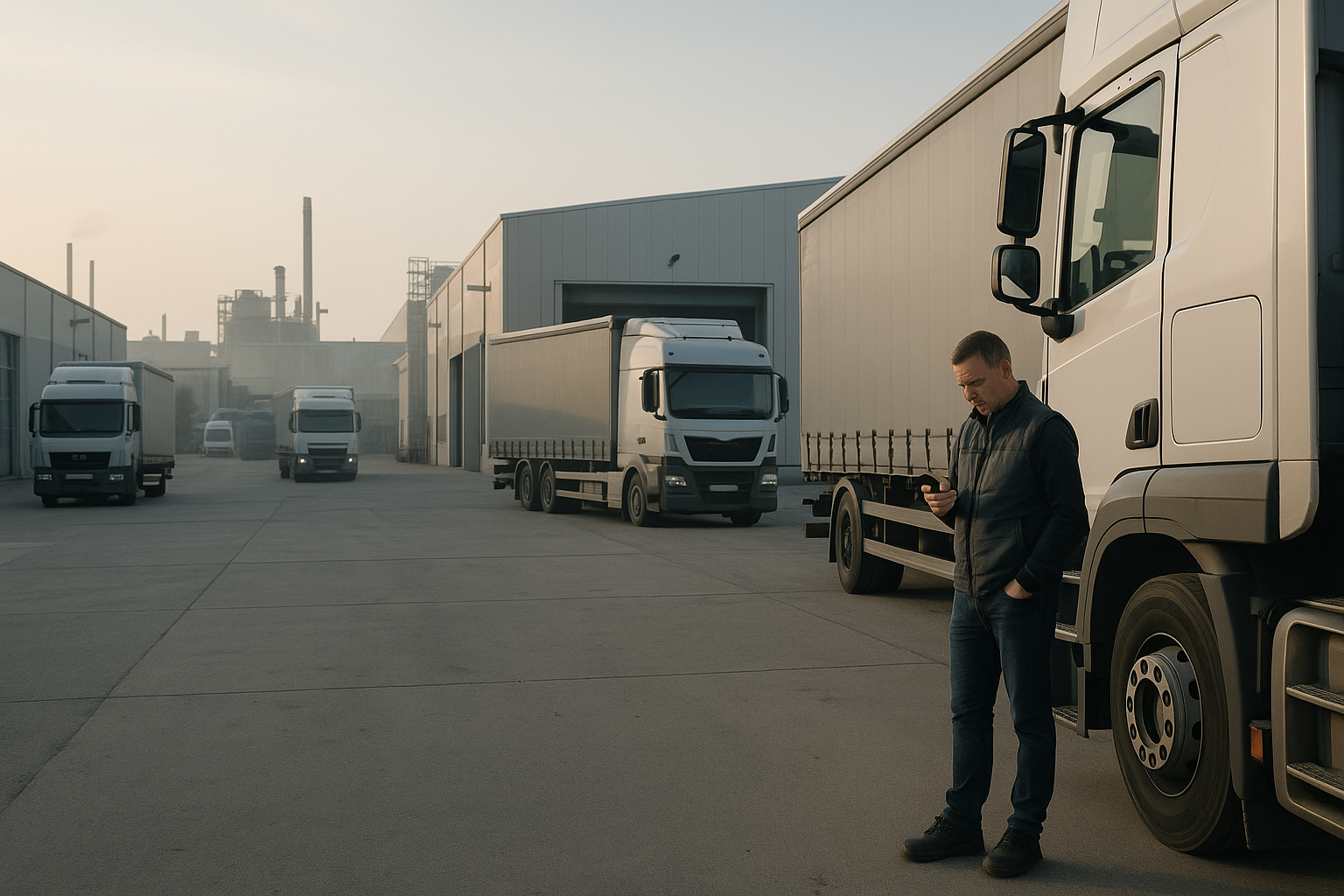
If you observe your planner at 07:15 in the morning, you probably see the same thing in most mid-sized manufacturing plants: they have the telephone in their hand, not because they are planning — but because they are reacting. One driver calls in late, another has been standing in front of the gate for 40 minutes, a third has taken the wrong entrance. In the background, a second mobile rings. On the screen: an Excel spreadsheet with yesterday’s slots still open.
This is not a failure. It is routine.
But few people calculate what it costs.
The firefighting function — and why it remains invisible
The term “planner” implies planning. Coordination means directing, organising, thinking ahead. In practice, this no longer applies to a growing portion of the working day.
What many logistics managers observe without naming it systematically: planning spends a considerable portion of the working day on communication that shouldn’t need to happen at all — if information were available earlier. Calls to haulage firms to find out where a particular lorry is right now. Forwarding to the driver who doesn’t speak English and hasn’t passed the phone to the plant. Questions about whether the delivery is still coming today or whether the dock can be released for someone else.
Each of these contact points has a response time. Every response time ties up a person.
“The planner will handle it.” This sentence is the most expensive normality in goods-in.
The problem is not that people communicate. The problem is that this communication has no plannable content — it arises from uncertainty, not from coordination needs. And it repeats itself daily, almost identically.
What the pattern is — and why it sustains itself
Imagine a typical inbound day: 30 deliveries, of which 18 are booked with a time window. Twelve are under FCA terms — meaning your supplier organises transport. You don’t know which haulage firm is coming, nor do you have a direct line to the driver. The time-window portal simply isn’t bookable for these consignments because no carrier access exists.
Of the 18 booked slots: how many arrive on time? Industry experience from German plants suggests a deviation rate of 30–50 % once delays over 15 minutes are counted. Sometimes it’s down to traffic. Sometimes the driver is coming from a previous job that has shifted. Sometimes the slot was booked, but the information never reached the driver — because there’s another intermediary between haulier and subcontractor.
The result: at 07:30, your planner cannot know for certain which of the ten planned deliveries for the first shift will actually arrive. They cannot plan. They wait — and the telephone takes over planning.
The calculation that rarely gets done
Coordination costs in goods-in planning don’t land in any cost centre that anyone sees directly. They are hidden in personnel costs, spread across planning, goods-in, sometimes even shift leaders.
Try applying the following micro-calculation to your own plant:
- Calls per day: A mid-sized plant with 25–40 inbound deliveries daily. Based on on-site observations: 15–25 outgoing calls intended to clarify the status of a delivery — driver whereabouts, status enquiries with the haulier, follow-ups about missing advance notice.
- Average call and follow-up time: 6–10 minutes per contact (dialling, transferring, entering notes in system or Excel).
- Personnel costs: Planner, goods-in clerk: realistically €30–40 per hour fully loaded.
- Working days per year: 240.
Let’s take the conservative scenario: 18 calls × 8 minutes × 240 days = 34,560 minutes per year = 576 hours. At €35/h fully loaded: roughly €20,000 annually — just for status communication that creates no added value, only manages uncertainty.
That doesn’t include damage from poorly planned docks. Doesn’t include overtime because a team waited for a late delivery. Doesn’t include extra effort when a dock was double-booked and a lorry stood on the yard for 45 minutes.
What the morning peak reveals
Around 40 % of all daily supplier deliveries to manufacturing plants arrive in the first 90 minutes after the plant opens. This is no accident — it’s the result of planners and production managers wanting to start early, drivers using night runs and suppliers optimising their routes for early arrival.
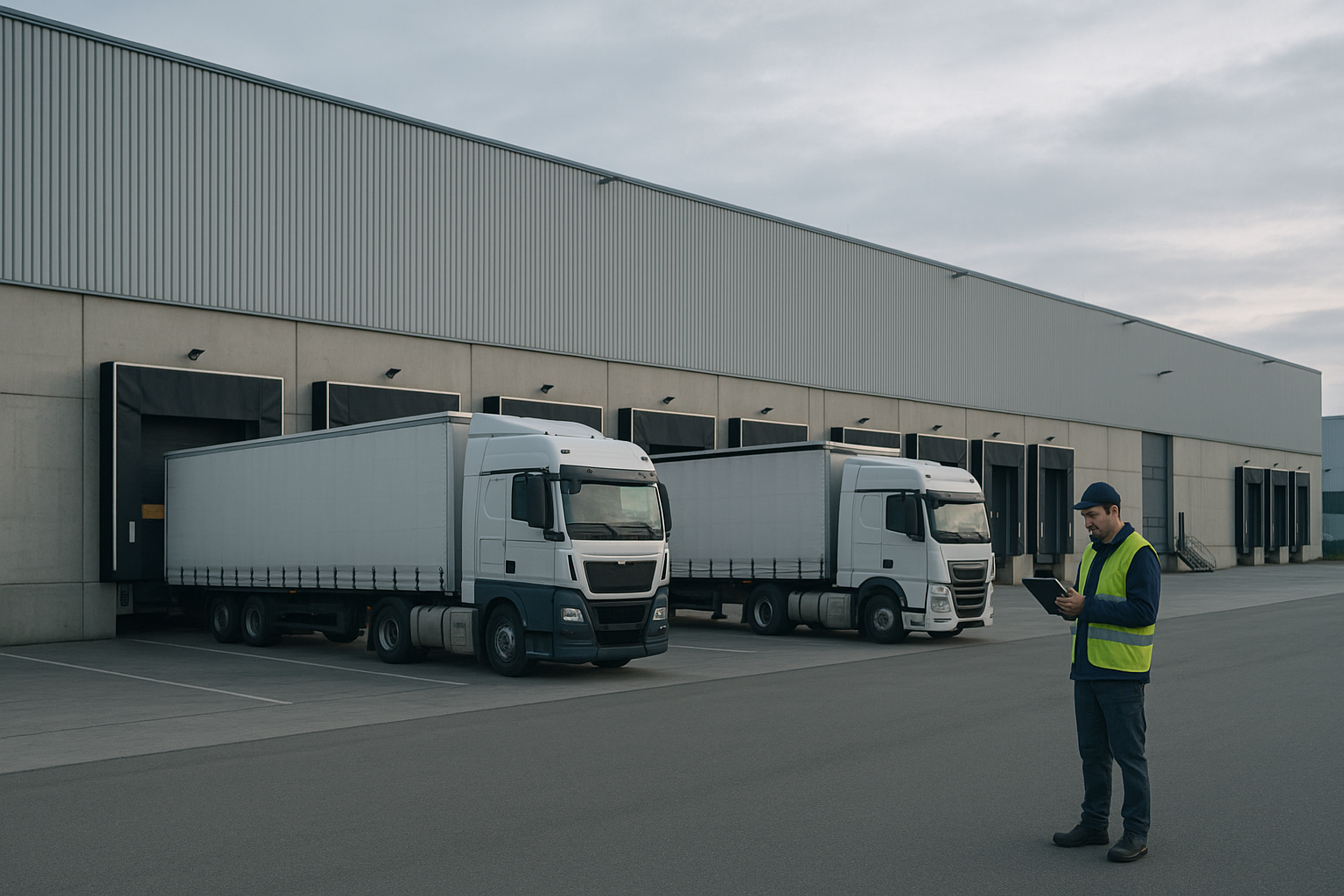
The result: between 06:30 and 08:00, more critical decisions happen on a plant yard than in the following four hours combined. Which dock gets which lorry? Who waits because a gate isn’t staffed? Who moves forward because their material is needed urgently?
All of this happens on yesterday evening’s information.
No one has sent drivers a message this morning. No one knows who’s stuck on the motorway and who’s already left. The planner improvises — and that’s called daily business.
Where the costs actually appear
A closer look reveals coordination costs in goods-in planning in several places at once — and none of them appear as a separate budget line:
- Personnel time planning: Reactive communication, status checks, rescheduling after late arrivals
- Personnel time goods-in: Waiting buffer because you don’t know if the lorry arrives in 10 or 60 minutes
- Dwell-time costs: Lorry on the yard waiting for a free dock — some freight contracts include dwell fees from minute 30 or 45 onwards; at €25–40 per half hour started, this adds up quickly
- Opportunity costs: Driver who breaks off and turns the vehicle around because waiting time is too long — delivery doesn’t arrive until the day after tomorrow
- Reputation effects: Carrier scores, internal ratings, worst-case public reviews that influence spot-market availability
None of these line items stands alone. They arise from the same root: information gap between the moment a delivery order is created and the moment the driver stands in front of the gate.
What planners could actually do
This is not criticism of people — it’s criticism of structures.
An experienced planner knows the suppliers, understands the peculiarities of particular hauliers, knows which dock suits which goods type and can foresee bottlenecks before they arise. That is genuine planning performance. That is the work this position exists for.
But if 40–50 % of the working day goes to status communication that no system automatically provides — then that is no longer planning, that is firefighting. And firefighting is expensive, draining and doesn’t scale when delivery volume grows.
Many logistics managers who raise this issue are told: “We’ve always done it this way.” Or: “It comes with the territory.” Both are true as descriptions of reality. Neither justifies why it has to stay that way.
What happens when information arrives earlier
If a driver knows when they should arrive — and if the plant knows when the driver will arrive — the bulk of reactive communication disappears of its own accord. Not because you’ve defined a problem away, but because the uncertainty that telephone calls create is replaced by transparency.
This sounds simple. The question is how to technically arrange this information exchange so it actually works — also with FCA deliveries, also with subcontractors, also with drivers who won’t have a portal login and won’t install an app.
Heylog automatically sends the driver a WhatsApp — they check in before arriving. No app, no portal, no call. You see in the dashboard when they arrive, and can plan the dock accordingly. The planner reaches for the telephone when it actually makes sense — not because the system is silent.
One last question
How many calls did your planning team make today to learn something that should have been known anyway?
If you don’t know exactly — that is itself an answer.
Frequently asked questions
What are typical coordination costs in a plant’s planning department?
Coordination costs in goods-in planning arise primarily through reactive communication: status calls to hauliers, driver queries and short-notice rescheduling. A conservative estimate for a mid-sized plant with 25–40 inbound deliveries daily quickly yields 500–600 hours per year spent exclusively on information gathering — with no direct planning benefit.
Why can’t the time-window portal cover many inbound deliveries?
With FCA (Free Carrier) deliveries, the supplier organises transport independently. The receiving plant has no contractual partner at the carrier and therefore no portal access. Industry estimates suggest 40–70 % of DACH inbound deliveries run under FCA terms — these consignments remain invisible to conventional time-window systems.
How can the morning peak at goods-in be better managed?
Around 40 % of all daily supplier deliveries arrive in the first 90 minutes after the plant opens. Effective management requires real-time information about expected arrival times before the lorry shows up — not after. With an early confirmed ETA from the driver, you can allocate docks proactively instead of rescheduling reactively.