
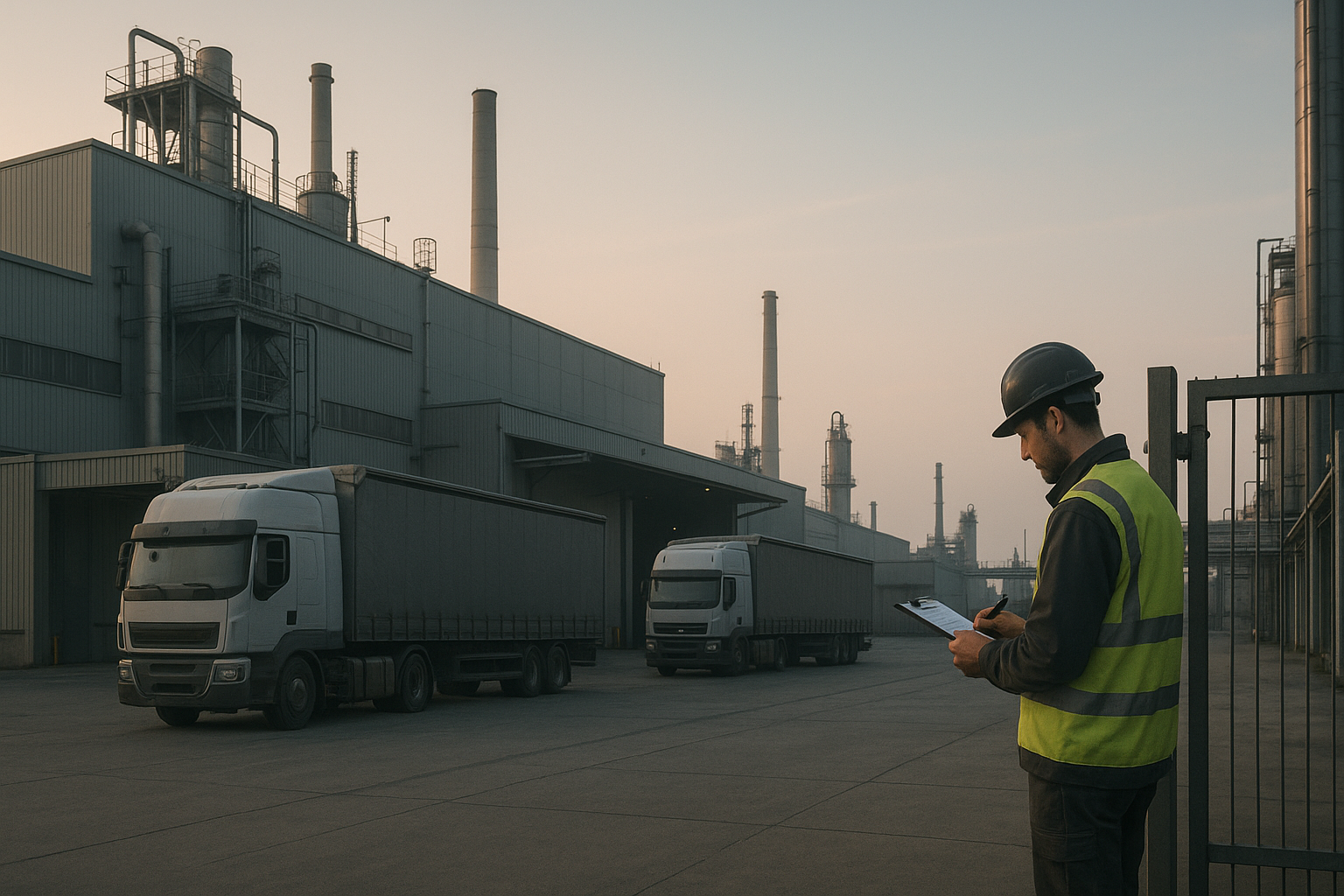
Somewhere between the booked slot and the plant gate, there is a time window that no system sees. No TMS, no slot portal, no yard management tool. And it is precisely in this window that the same calls, the same emails, the same WhatsApp messages occur daily — because someone wants to know when the driver will actually arrive.
“Have you reached the driver yet?”
You know this scene. It is just after seven. The first truck should have arrived at 06:45. Three staff are standing at goods-in, two docks are reserved, a forklift team is waiting. The driver is not there. Your dispatcher calls the haulage company — first line, no signal. Second attempt: the switchboard answers, but the driver is “out of range” or has “a different vehicle”. Someone will call back.
In parallel, someone sends an email to the supplier who arranged the transport. They reply around 8:15 with the note that the haulage company has confirmed the driver is “on the way”. Which route, how far, how long — unknown.
At some point, a WhatsApp arrives from an unknown sender: “I’ll be there in 20 minutes.” No name, no delivery note number, no reference to any system.
This is not an exception. This is standard communication in German plants — every day, with multiple deliveries simultaneously.
Why this sequence is structurally unavoidable
One might think this is a discipline problem. Drivers who don’t report in. Haulage companies that don’t provide updates. Suppliers that inform too late. But that misses the mark.
The real cause is a gap in system architecture that nobody consciously designed — it simply emerged.
Slot portals book time windows. That is their function, and they do it well. What they do not do: after booking, they no longer know where the driver is. The slot exists in the portal. The driver exists somewhere on the road. There is no connection between the two.
There is also a structural contract problem: between 40 and 70 percent of inbound volume in DACH plants runs under FCA terms. This means: the supplier orders the haulage company, not your plant. You have no direct access to the carrier, no right to information, and often not even a phone number for the driver. You stand at the end of a communication chain that you did not initiate yourself.
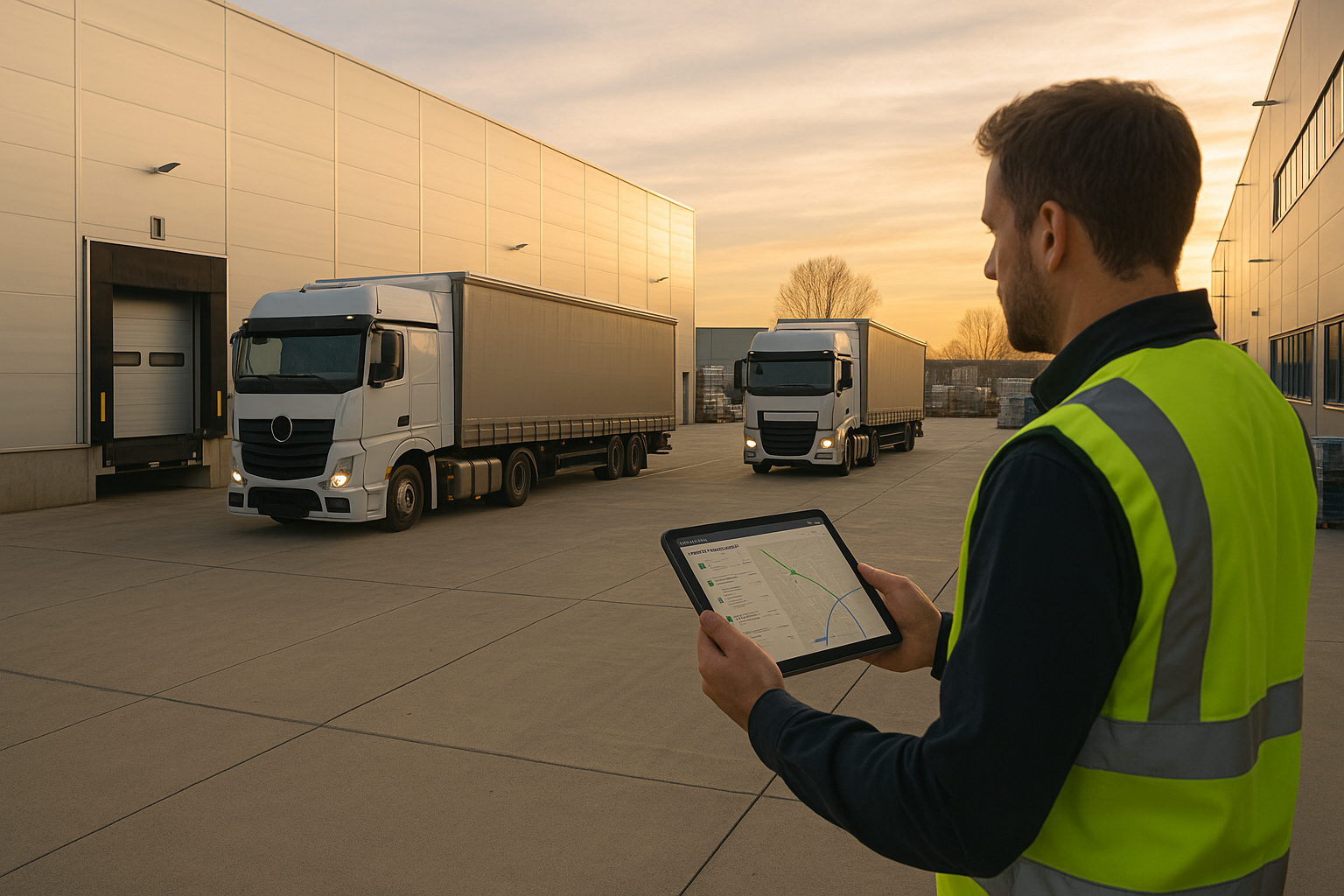
The haulage company often then engages a subcontractor. This subcontractor deploys a driver who already had three other stops early in the morning, possibly communicates in a different language, and whose current location is not visible to anyone in the system — not to the haulage company, not to the supplier, and certainly not to your plant.
The result: the only reliable information source is the telephone.
What that really means per day
Imagine a medium-sized manufacturing plant: 35 to 50 inbound transports per day, around half of which require some coordination effort — because the driver arrives too early, too late, or no advance notification exists.
Rough estimate, conservative:
- 18 deliveries without reliable ETA at the time of dock assignment
- Per delivery average of 8–12 minutes coordination effort (call, callback, email, internal coordination)
- Two people involved: dispatcher and goods-in
- Internal hourly rate: €35/h
That gives: 18 × 10 min × 2 people × 250 working days × €35/h ÷ 60 = roughly €52,500 per year — solely for coordination effort that produces no tangible or saleable result.
Please apply this calculation to your own plant. Perhaps it is 12 deliveries, perhaps 25. Perhaps your dispatcher is involved only once, not twice. The equation remains the same — only the final sum changes.
What the calculation does not include: opportunity cost. While your dispatcher searches for the driver, they are not planning. While the dock waits, the forklift team loses productive time. While you spend five minutes writing a supplier email, you miss the information that three other trucks will arrive at the yard simultaneously.
The morning peak: when everything arrives at once
The problem concentrates temporally. Not distributed across the day — but in a very narrow window.
Industry observation shows that approximately 40 percent of all daily inbound deliveries arrive in the first 90 minutes after plant opening. For a plant that opens at 06:00, this means: between 06:00 and 07:30, not five trucks arrive — but twenty.
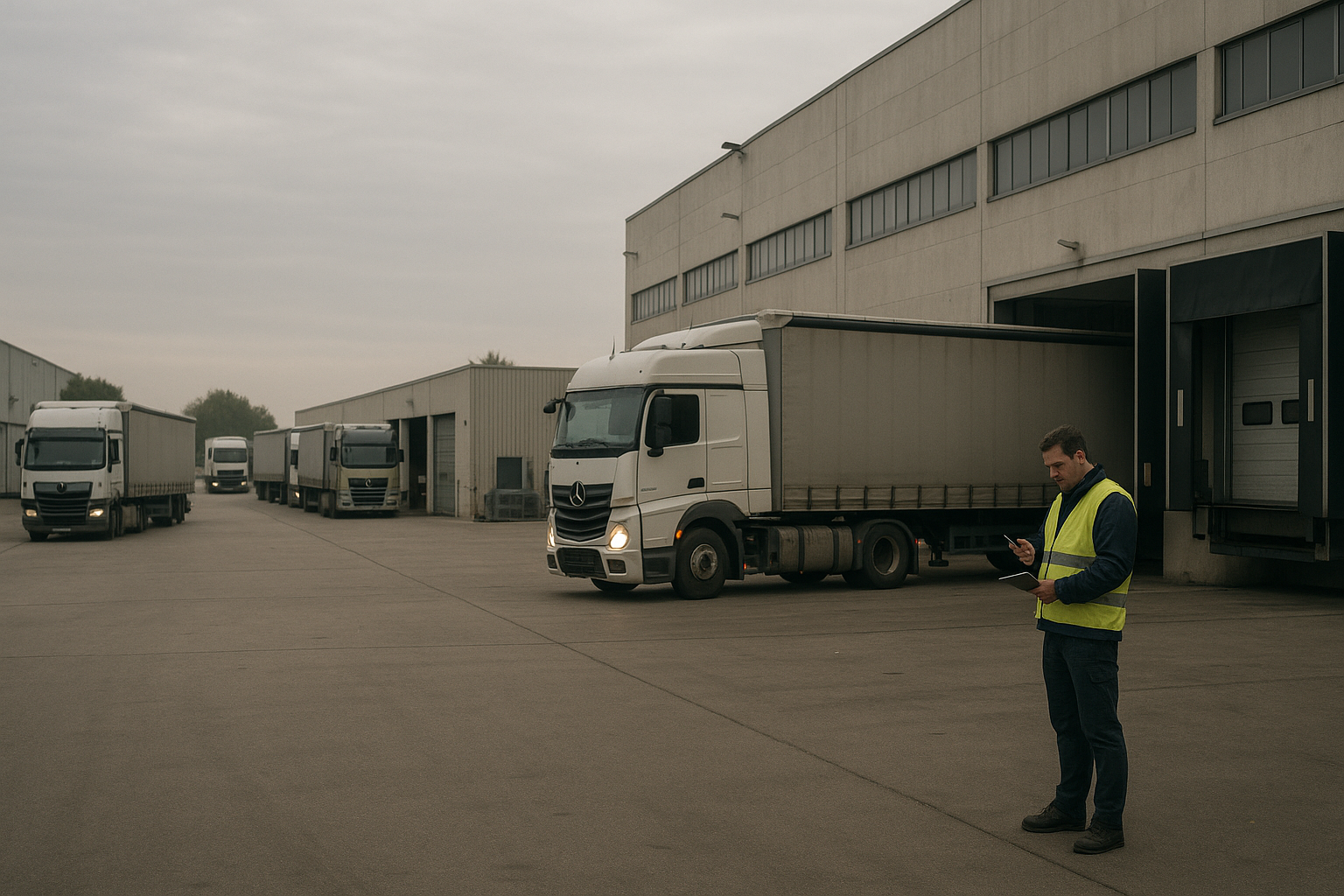
It is precisely in this window that your dispatcher simultaneously tries to reach multiple drivers, whilst the first arrivals with no announcement pull up to the gate, and those for whom a dock was reserved are still somewhere on the motorway.
The slot portal has issued all these drivers with time slots. But it does not know who will arrive on time. The slots are statements of intent — not arrival guarantees.
“A slot is not a promise. It is a hope that was entered into the system.”
This is not criticism of the slot portal concept. It is a sober description of its limits.
Why stricter rules do not solve the problem
The most common response to chaotic morning-peak situations is regulation: stricter notification rules, higher penalties for late arrivals, mandatory advance-notice deadlines.
The problem: these rules address the wrong point. They target the behaviour of the haulage company — not the information situation of your plant.
Even if a haulage company knows and wants to follow the rule: after task handover, they often lack real-time access to their driver. The driver has the logbook, the satnav, the phone — but no system that automatically reports back. And the subcontractor chain amplifies this effect: the more intermediaries, the larger the information gap.
Stricter rules increase administrative burden on both sides. They do not make arrival times more reliable.
What works instead: direct to the driver
The fundamental problem is not the discipline of those involved. It is the missing communication channel to the last link in the chain — to the driver themselves.
97 percent of drivers carry their own smartphone. Not all have an app installed. Not all speak German. Not all have access to a haulage company portal. But nearly all use WhatsApp.
This is not a hypothesis. This is the reality on German plant yards.
If the communication path to the driver is direct, low-barrier, and requires no app download — then most of these calls disappear. Not all, but those that occur simply because nobody knows where the driver is.
Heylog automatically sends the driver a WhatsApp — before arrival. They confirm their ETA. You see it in the dashboard, without a call, without an app, without portal login. The driver checks in before they arrive — not when they are already at the gate and nobody is prepared.
From information deficit to controllability
Most plants have very good tools for what happens after arrival: dock management, yard control, dock scheduling. These systems are mature.
What is missing is the upstream layer: 12 to 48 hours before arrival. Who is coming when? How reliable is the ETA? Has the driver already unloaded, or is they driving with a full load directly from another location?
Without this information, your plant reacts. It manages arrivals. With this information — received in time, reliably, without manual follow-up — planning begins.
The difference between reactive logistics and active planning does not lie in the yard management system. It lies in the moment when you know what is rolling onto your yard in the next two hours.
What remains
Three calls. Two emails. One WhatsApp.
This is not an inefficiency that can be talked away through discipline or new rules. It is the predictable consequence of a structural information vacuum — between the slot in the portal and the driver on the road.
The question is not whether this happens in your plant. The question is: How many of your dispatcher hours are currently stuck in exactly these moments — and what could they be doing instead?
Frequently asked questions
Why is truck arrival coordination in plants so time-consuming?
Truck arrival coordination is time-consuming because slot portals maintain no connection to the driver after booking. With FCA transports — which account for 40–70 % of inbound in DACH plants — the plant has no direct access to the carrier. The telephone remains the only information source, generating multiple coordination steps per delivery daily.
What does missing ETA information before truck arrival cost a plant per year?
With 18 deliveries daily lacking reliable ETA, 10 minutes coordination effort per delivery with two people, and an internal hourly rate of €35/h, the figure over 250 working days is roughly €52,500 — solely for communication that produces no output. Actual costs vary significantly depending on plant size.
Why do stricter notification rules often not help with the morning peak?
Stricter rules address haulage company behaviour, not plant information. Since roughly 40 % of all daily inbound deliveries arrive in the first 90 minutes after plant opening, and haulage companies often lack real-time driver access after task handover, regulation increases administrative burden — arrival reliability scarcely improves.